 info@rusticfrontiers.com
  +975 17692115/77692115
Capital City of Bhutan
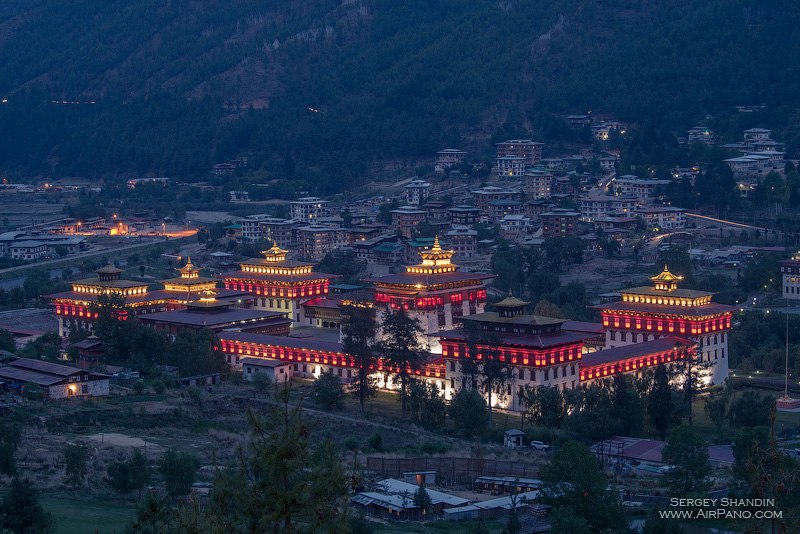
Thimphu, the capital city of Bhutan, is a captivating blend of tradition and modernity, embodying the nation’s unique approach to progress rooted in cultural preservation. As the political, religious, and commercial hub of the country, Thimphu plays a central role in shaping Bhutan’s development while maintaining its deep spiritual and cultural essence.
Nestled in a scenic valley along the Wang chhu river, the city harmoniously combines traditional Bhutanese architecture with contemporary urban life. Government offices, monasteries, and dzongs stand alongside modern cafés, boutiques, and institutions, reflecting the country’s evolving identity. Home to civil servants, expatriates, and members of the monastic community, Thimphu exudes a distinctive charm-modern in its outlook yet deeply anchored in Bhutan’s timeless values and heritage.
Despite its growing urbanization, the city has preserved its architectural authenticity, where even new structures must adhere to traditional designs featuring ornate woodwork, sloping roofs, and intricate patterns. This balance between progress and preservation makes Thimphu not only the administrative heart of Bhutan but also a living showcase of the nation’s enduring cultural spirit.
Trashichhoe Dzong

The “fortress of the glorious religion” was initially erected in 1641 and rebuilt by King Jigme Dorji Wangchuck in the 1960s. Trashichhoe Dzong houses His Majesty’s Secretariat, some ministries, and the central monk body. It is open to visitors during the Thimphu Tshechu (held in autumn) and while the monk body is resident in its winter quarters at Punakha Dzong.
Memorial Chhorten (Stupa)

The building of this chhorten was originally the idea of Bhutan’s Third King, His Majesty Jigme Dorji Wangchuck “the father of modern Bhutan”, who had wished to erect a monument to world peace and prosperity, but was unable to give shape to his idea in his lifetime due to pressures of State. After His Majesty’s untimely death in 1972, the Royal family and Cabinet resolved to fulfill his wishes and erect a memorial that would perpetuate his memory and also serve as a monument to peace. The National Memorial stupa was consecrated on July 28, 1974. The finely executed wall paintings and delicately fashioned statues within the monument provide a deep insight into Buddhist philosophy.
Buddha Dordenma Statue, Kuensel Phodrang
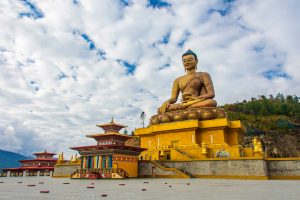
The Buddha Dordenma, a colossal 177-foot (54-meter) statue of Shakyamuni Buddha stands at Kuensel Phodrang overlooking Thimphu valley. Built by Aerosun Corporation of China and sponsored by Rinchen Peter Teo and Danny Wong, the project was supported by Buro (Australia) and Arup HK. The statue, one of the largest in the world, houses over 100,000 smaller gilded bronze Buddhas. It fulfills an ancient prophecy by Yogi Sonam Zangpo and is also linked to a terma of Guru Rinpochhe revealed by Terton Pema Lingpa. Nearby, the Kuensel Phodrang Nature Park, opened in 2011, offers peaceful trails and panoramic views of Thimphu.