 info@rusticfrontiers.com
  +975 17692115/77692115
Lhuntse is 75km from Mongar (3-hours’ drive) and is one of the most isolated districts in Bhutan. The landscape is spectacular, with stark cliffs towering above river gorges and dense coniferous forests. The region is famous for its weavers, and their distinctive textiles are generally considered to be the best in the country. The Kurtoe region of Lhuntse is the ancestral home of the monarchy.
Lhuntse Dzong
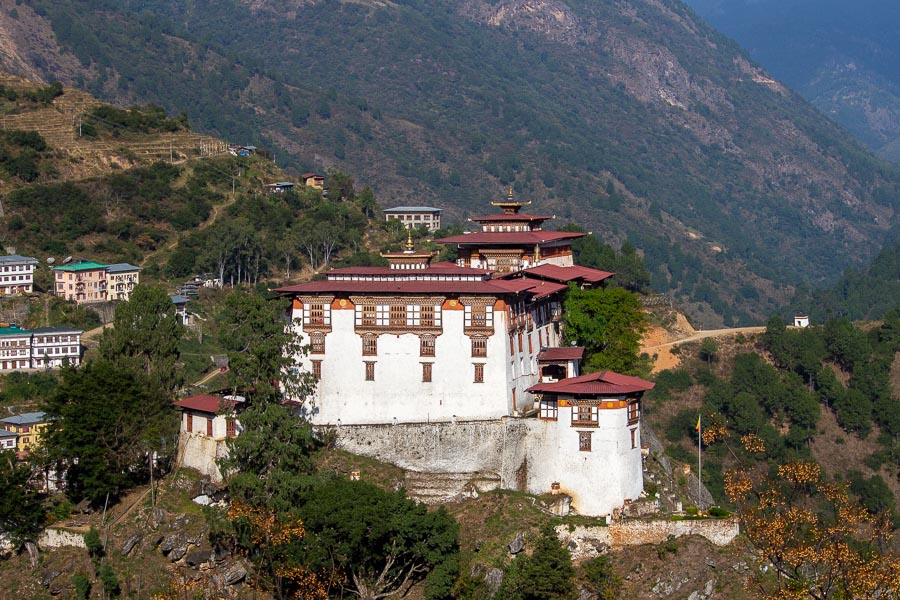
The statue of Tshepamey, a sacred artifact in Lhuntse district, was discovered by a fisherman in a stream, possibly Kiling chhu. It was placed in Kiling temple but repeatedly escaped, believed to be refusing to stay. On one occasion, the statue’s crown was broken by a stone thrown by Kiling Goenpo, the temple’s deity. It was later found by a woman in the fields who accidentally injured its thumb. Locals believe smoke rises from the statue’s grave in the eighth month before the “blessed rainy day.”
The Dzong suffered major damage in a 6.1 magnitude earthquake in 2009 but was fully renovated by October 2013. It was inaugurated on 12 April, 2014 by His Royal Highness, Gyaltshab Jigme Dorji Wangchuck. The district proudly hosts the largest Guru Rinpochhe statue in the world.
Dungkar Nagtshang
 Lhuntse district is the ancestral home of the Kings of Bhutan. About 50km north of Lhuntse district lies Dungkar village, the birthplace and ancestral home of Jigme Namgyal, the father of Bhutan’s First King. This village is home to the historic Nagtshang and also features a sacred site known as “Rinchhen Bumpa Ney”, which can be reached after a hike of approximately 4 to 5-hours rom Dungkar.
Guru Statue
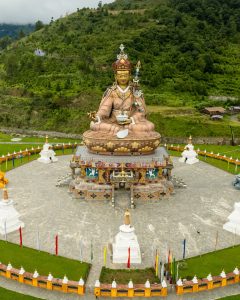
This district is also home to one of Bhutan’s most magnificent landmarks – the 173-foot-tall statue of Guru Rinpochhe at Takila. Built in fulfillment of a prophecy by Terton Lerab Lingpa to prevent a foretold “war of the horse”, the statue embodies profound spiritual significance. Constructed by the Druk Odiyana Foundation, it majestically overlooks the Tangmachhu valley, radiating a sense of peace and sanctity. Today, the site attracts pilgrims and visitors from across Bhutan and beyond, serving as a powerful symbol of faith, protection, and harmony for the region.
Khoma Village

Khoma village, located about 11km from the district headquarter, offers a serene journey through pine forests and gentle slopes. This charming village is renowned for its signature woven textile, the Kishuthara, which is highly prized across Bhutan. The women of Khoma sit in makeshift textile cottages, weaving intricate designs by hand.
Purchasing a Kishuthara here is much more affordable than buying it in the capital’s handicraft shops. Known as one of the most desired garments for special occasions like Tshechus and Wangs (blessings), Kishuthara also provides an important source of income for farmers during the off-winter season.
Just above this village lies a sacred cave ney (pilgrimage site) of Guru Rinpochhe, who is said to have meditated for six months. However, the site is famously known as “Sangay Lodrug”, meaning “six years of meditation”. It is about an hour’s walk from Khoma village.